
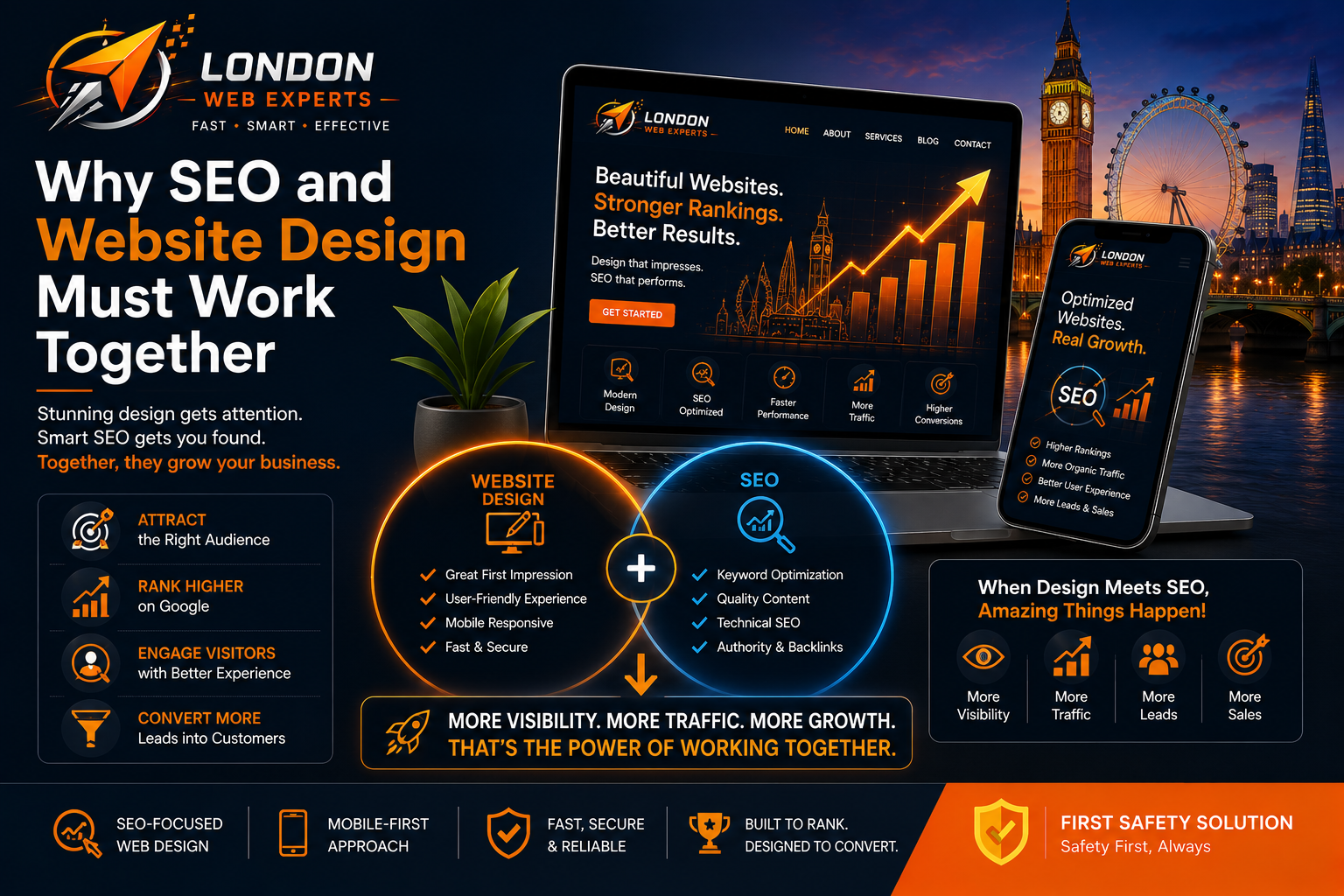
The Connection Between SEO and Website Design
Many business owners treat SEO and website design as two separate services. They invest in creating a visually attractive website and only think about SEO after the site is launched. Unfortunately, this approach often leads to poor search rankings, lower traffic, and missed business opportunities. The reality is that SEO and Website Design are closely connected. A website may look amazing, but if search engines cannot properly crawl, understand, and rank it, potential customers may never find it. Similarly, a website that ranks well but provides a poor user experience may struggle to convert visitors into customers.
In today’s AI-driven search environment, Google prioritizes websites that combine excellent design, strong technical SEO, high-quality content, and outstanding user experience. Businesses that align SEO and Website Design from the beginning are far more likely to achieve long-term online success.
Featured Snippet Answer
SEO and Website Design must work together because website structure, page speed, mobile responsiveness, navigation, content organization, and user experience directly impact search rankings and conversions. Combining SEO and Website Design helps businesses improve visibility, attract qualified traffic, and generate more leads.
Why SEO and Website Design Are Connected
SEO and Website Design share the same goal: helping users find information quickly and efficiently. Search engines evaluate how visitors interact with websites. If users struggle to navigate pages, find information, or complete actions, rankings can suffer. A modern website should be built with SEO principles integrated from the start rather than added later. This creates a stronger foundation for long-term growth.
• Improves website visibility
• Enhances user experience
• Supports search rankings
• Increases website traffic
• Improves engagement metrics
• Generates more leads
Search Engines Need a Well-Structured Website
Google relies on website structure to understand content and determine rankings. Poorly organized websites can make it difficult for search engines to crawl and index pages effectively. SEO and Website Design work together by creating logical page structures, clear navigation systems, and optimized internal linking. This helps search engines understand your content while making navigation easier for visitors.
Businesses looking to improve website structure can also explore our Website Design London services to create a stronger digital foundation.
• Improves crawlability
• Supports indexing
• Enhances content organization
• Helps search engines understand topics
• Strengthens internal linking
• Improves website usability
User Experience Impacts Rankings
Google increasingly prioritizes websites that provide positive user experiences. Factors such as bounce rate, time on site, and engagement signals can influence search performance. SEO and Website Design both contribute to user experience. A website should be easy to navigate, visually appealing, and designed to help users find information quickly.
According to Google’s Search Central documentation: https://developers.google.com/search
User-focused websites are more likely to perform well in search results.
• Improves visitor satisfaction
• Reduces bounce rates
• Encourages longer visits
• Increases engagement
• Supports ranking signals
• Enhances credibility
Mobile-Friendly Design Supports SEO
Most searches now happen on smartphones. Google uses mobile-first indexing, meaning it primarily evaluates the mobile version of a website when determining rankings. SEO and Website Design work together to ensure websites are responsive and accessible across all devices. A mobile-friendly website improves usability while supporting SEO performance.
Businesses interested in improving mobile experiences can also review our Mobile-Friendly Website Design services.
• Supports mobile-first indexing
• Improves mobile usability
• Enhances search visibility
• Reduces mobile bounce rates
• Improves accessibility
• Increases customer engagement
Website Speed Affects Search Performance
Website speed is one of the most important technical factors connecting SEO and Website Design. Slow websites frustrate visitors and often experience lower rankings. Modern website design includes speed optimization techniques such as image compression, efficient coding, and performance-focused development practices.
You can test your website performance using: https://pagespeed.web.dev/
• Improves user experience
• Supports SEO rankings
• Reduces abandonment rates
• Increases conversions
• Improves mobile performance
• Enhances website efficiency
SEO-Friendly Navigation Improves Visibility
Navigation helps users explore a website, but it also helps search engines understand relationships between pages. SEO and Website Design should work together to create intuitive navigation structures that improve both user experience and crawlability. A clear menu structure makes it easier for visitors to find information and encourages them to explore additional pages.
• Supports website architecture
• Improves user journeys
• Enhances crawlability
• Increases page views
• Strengthens internal linking
• Improves engagement
Content and Design Must Work Together
Content is one of the most important ranking factors, but even excellent content can perform poorly if presented poorly. SEO and Website Design combine to create content layouts that are easy to read and visually engaging. Proper use of headings, images, white space, and call-to-action elements helps visitors consume information effectively.
Businesses looking to strengthen organic visibility can also explore our SEO Services London solutions.
• Improves readability
• Enhances user engagement
• Supports content discovery
• Improves SEO performance
• Increases time on page
• Encourages conversions
Technical SEO Starts with Website Design
Many technical SEO elements are implemented during website development. These include site architecture, page speed optimization, mobile responsiveness, schema markup, and URL structure. SEO and Website Design should be planned together from the beginning to avoid costly changes after launch.
Search Engine Land regularly publishes technical SEO insights:
https://searchengineland.com/
• Supports indexing
• Improves website performance
• Enhances crawlability
• Reduces technical issues
• Supports structured data
• Improves rankings
Better Design Increases Conversions
Generating traffic is only part of the equation. A website must also convert visitors into customers. SEO and Website Design help businesses create customer-focused experiences that encourage enquiries, purchases, and bookings. Conversion-focused design improves the return on SEO investments.
• Increases enquiries
• Improves sales opportunities
• Enhances customer journeys
• Supports business goals
• Increases revenue potential
• Maximizes marketing ROI
AI Search Rewards User-Focused Websites
Modern search engines increasingly rely on artificial intelligence to evaluate content quality and user satisfaction. Google’s AI-powered search experiences focus on delivering the most useful and trustworthy results. This means SEO and Website Design must work together to create websites that provide clear information, fast experiences, and helpful content.
AI systems often prioritize websites that demonstrate strong EEAT principles:
• Experience
• Expertise
• Authoritativeness
• Trustworthiness
Websites that combine these factors with excellent design are more likely to succeed in AI-driven search environments.
Local SEO Benefits from Good Website Design
Local businesses can significantly benefit when SEO and Website Design work together. A well-designed website improves local rankings by enhancing user experience, page speed, and mobile usability. Businesses serving specific locations should include local landing pages, optimized contact information, and location-specific content.
Google Business Profile guidance can be found at: https://support.google.com/business/
• Improves local visibility
• Supports Google Maps rankings
• Attracts nearby customers
• Improves local relevance
• Increases local enquiries
• Enhances trust signals
Common Mistakes Businesses Make
Many businesses fail to integrate SEO and website design during development. This often creates long-term performance issues that require expensive fixes later. Common mistakes include launching websites without SEO planning, ignoring mobile users, neglecting page speed, and creating poor navigation structures.
• Treating SEO as an afterthought
• Prioritizing design over usability
• Ignoring technical SEO
• Poor mobile optimization
• Slow page speeds
• Weak content structures
Why Investing in SEO and Website Design Matters
Businesses that combine SEO and Website Design create stronger digital foundations for growth. Instead of focusing only on appearance or rankings, they build websites that attract visitors and convert them into customers. The most successful websites balance aesthetics, performance, technical optimization, and user experience. This integrated approach delivers better long-term results than treating SEO and design separately.
• Higher search rankings
• More organic traffic
• Better user experiences
• Increased conversions
• Improved credibility
• Sustainable business growth
Ready to Improve Your Website?
If your website struggles to rank on Google, attract traffic, or generate leads, it may be time to rethink how SEO and Website Design work together. A professionally designed website built with SEO best practices can improve visibility, engagement, and conversions. Our team specializes in creating SEO-focused websites that combine modern design, technical optimization, and conversion-driven strategies. Contact us today to learn how we can help your business grow online.
FAQ Section
Why are SEO and Website Design connected?
SEO and Website Design are connected because website structure, speed, mobile usability, navigation, and content presentation all influence search rankings and user experience.
Can a beautiful website rank poorly on Google?
Yes. A visually attractive website can still rank poorly if it lacks technical SEO, optimized content, mobile responsiveness, or proper site structure.
Does website design affect SEO?
Absolutely. Website design impacts page speed, user experience, navigation, mobile usability, and technical SEO, all of which influence rankings.
Which is more important: SEO or website design?
Neither should be prioritized over the other. The best results occur when SEO and Website Design are planned and implemented together.
How does website speed affect SEO?
Faster websites improve user experience and help search engines crawl pages more efficiently, which can positively influence rankings.
Can redesigning a website improve SEO?
Yes. A strategic redesign can improve technical SEO, mobile responsiveness, content structure, and user experience, leading to better search performance.
Conclusion
SEO and Website Design are no longer separate disciplines. Modern businesses need websites that are visually appealing, technically optimized, mobile-friendly, and user-focused. By integrating SEO and Website Design from the start, businesses can improve rankings, attract more qualified traffic, increase conversions, and achieve sustainable growth. As AI-driven search continues to evolve, websites that combine exceptional design with strong SEO foundations will be best positioned for long-term success.
📞 Call Now: 02034888123
📍 Visit Us: Quantum Offices, Mountview House, 212 High Rd, Ilford IG1 1QB