On-Page SEO Can Make Your Business Website More Visible
Having a website does not automatically mean customers will find it through Google. Your website needs to clearly communicate what your business offers and help search engines understand your pages. This is where On-Page SEO becomes important.
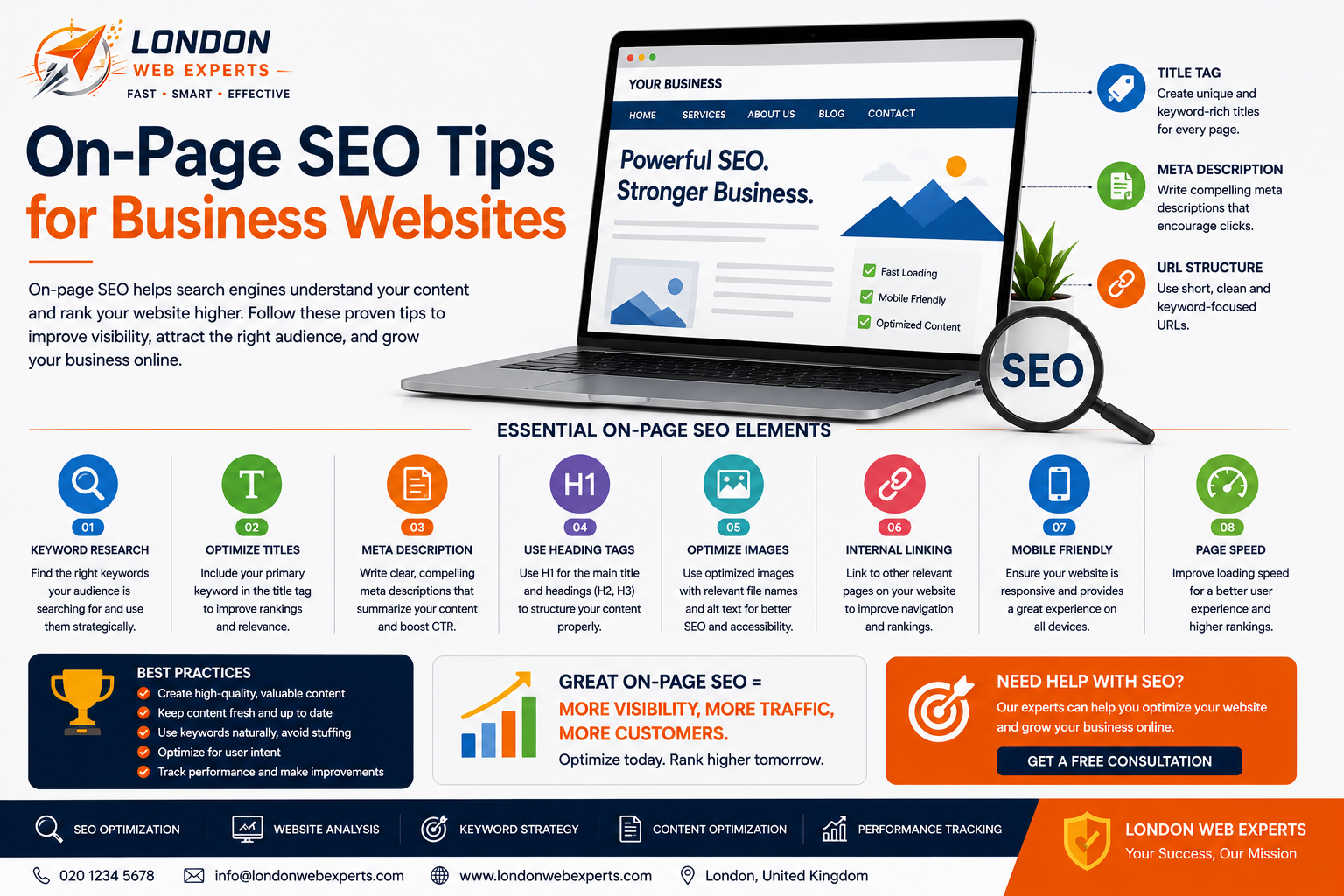
On-page optimization involves improving elements that exist directly on your website, including page titles, headings, content, URLs, images, internal links, and page structure. When these elements are properly optimized, both search engines and visitors can understand your website more easily. For businesses in competitive locations such as London, strong on-page optimization can help create a better foundation for attracting relevant organic traffic.
On-Page SEO is the process of optimizing individual website pages to improve their visibility in search engines and provide a better experience for users. It includes optimizing titles, headings, content, URLs, images, internal links, keywords, and page structure around relevant search intent.
What Is On-Page SEO?
On-Page SEO refers to the optimization of individual pages on your website. Unlike off-page SEO, which focuses on activities such as backlinks and external mentions, on-page optimization concentrates on elements you can directly control. This includes your content, headings, page titles, URLs, images, links, and the way information is structured. The purpose is not simply to insert keywords into every section. Effective optimization helps search engines understand relevance while making the page more useful for the people reading it.
Important on-page elements include
- SEO titles
- Meta descriptions
- Headings
- Website content
- Keywords
- URLs
- Internal links
- Images
Why On-Page SEO Matters for Business Websites
Business websites need to attract the right visitors, not simply large numbers of visitors. Someone searching for a specific service is much more valuable than someone who has no connection to your business. On-Page SEO helps create relevance between what people search for and what your website provides. When pages are properly optimized, search engines have clearer information about your services, locations, topics, and business expertise.
Effective optimization can help businesses
- Improve organic visibility
- Attract relevant visitors
- Support higher rankings
- Increase website engagement
- Generate more enquiries
- Improve customer experience
Start With Search Intent
Before writing or optimizing a page, think about what the searcher actually wants. Search intent refers to the reason behind a search query. Someone searching “web design London” may be looking for an agency, while someone searching “how much does website design cost” may be researching prices before making a decision. Your page should satisfy the intent behind the keyword rather than simply mentioning the phrase repeatedly.
Common search intents include
- Informational searches
- Commercial research
- Local searches
- Product searches
- Service searches
- Transactional searches
Choose the Right Keywords
Keywords help connect your website content with what people search for. However, keyword research should focus on relevance and user needs rather than simply selecting keywords with the highest search volume. For example, a London web design company may target terms related to website design, business websites, SEO, e-commerce development, and local web services. Each page should have a clear primary topic instead of trying to rank for dozens of unrelated terms.
When choosing keywords, consider
- Search relevance
- Search intent
- Competition
- Business value
- Location
- Customer questions
Optimize Your SEO Title
The SEO title is one of the most important elements of a web page. It helps search engines understand the subject of the page and can influence whether users click your result. Your primary keyword should normally appear naturally near the beginning when appropriate. However, the title should still sound natural and appealing to users. Avoid creating titles that are simply lists of keywords.
Strong SEO titles should be
- Relevant to the page
- Clear and specific
- Easy to understand
- Attractive to searchers
- Naturally keyword-focused
- Appropriate for the search intent
Write Better Meta Descriptions
A meta description provides a short summary of a page. Although it is not a direct ranking factor, a useful description can encourage users to click your search result. Your description should explain what the page offers and why someone should visit it. Include your focus keyword naturally where it makes sense. For example, instead of writing a generic description, explain the benefit the visitor will receive from reading the page.
A good meta description should
- Describe the page accurately
- Match search intent
- Encourage clicks
- Include relevant keywords naturally
- Avoid keyword stuffing
- Be easy to read
Create Clear Website Headings
Headings make your content easier to scan. They also help search engines understand the organization of your page. Your main page heading should describe the primary topic, while supporting headings should introduce related sections. Do not create headings simply to include keywords. Each heading should help the reader understand what information comes next.
Good heading structure includes
- One clear H1
- Relevant H2 sections
- Supporting H3 headings
- Natural keyword variations
- Logical content flow
- Clear topic organization
Improve Your Website Content
High-quality content is central to successful On-Page SEO. A page should provide useful information rather than simply trying to rank for a keyword. Business websites should explain services clearly, answer customer questions, demonstrate expertise, and provide enough information for visitors to make informed decisions. For service pages, include details about what you provide, who it is for, benefits, processes, FAQs, and ways to contact your business.
Useful website content should
- Answer customer questions
- Explain services clearly
- Demonstrate expertise
- Match search intent
- Provide practical information
- Encourage appropriate action
Use Keywords Naturally
Keyword optimization does not mean repeating the same phrase throughout a page. Excessive repetition can make content difficult to read and may create an unnatural experience. Instead, use your primary keyword where relevant and include related phrases, synonyms, entities, and natural variations. For example, a page focused on On-Page SEO could naturally discuss title tags, headings, content optimization, internal linking, search intent, and page structure.
Avoid keyword stuffing by
- Writing for people first
- Using natural variations
- Avoiding unnecessary repetition
- Covering related topics
- Answering real questions
- Prioritizing usefulness
Optimize Your URLs
A clear URL helps users and search engines understand what a page is about. Short, descriptive URLs are generally preferable to long URLs containing unnecessary words or numbers.
For example:
Good:/on-page-seo-business-websites/
Less useful:/services/page123?id=4589&category=seo
Keep URLs simple and relevant to the page topic.
Good URLs should be
- Short
- Descriptive
- Easy to read
- Relevant
- Consistent
- Free from unnecessary parameters
Strengthen Internal Linking
Internal links connect pages within your own website. They help visitors discover related information and can help search engines understand the relationship between different pages. For example, a blog about On-Page SEO can naturally link to your website design services, SEO services, portfolio, and contact page.
For your London Web Experts website, relevant internal links can include:
Website:
https://londonwebexperts.co.uk/
Services:
https://londonwebexperts.co.uk/services/
Portfolio:
https://londonwebexperts.co.uk/portfolio/
Contact:
https://londonwebexperts.co.uk/contact-us/
Use descriptive anchor text instead of repeatedly using phrases such as “click here.”
Internal links can help
- Improve website navigation
- Connect related content
- Help visitors discover services
- Distribute internal authority
- Support website structure
- Encourage deeper engagement
Optimize Images for Search and Users
Images can make business websites more engaging, but poorly optimized images can slow down pages. Use appropriate image formats, suitable dimensions, descriptive file names, and meaningful alt text where appropriate. Alt text should describe the image for users who cannot see it rather than being filled with keywords.
Image optimization includes
- Compressing large images
- Using suitable formats
- Writing descriptive alt text
- Using meaningful filenames
- Avoiding unnecessary images
- Maintaining good visual quality
Improve Mobile Experience
A large percentage of online searches take place on smartphones. A website that works poorly on mobile devices can create a poor customer experience. Your pages should be easy to read and navigate regardless of screen size. Buttons should be easy to tap, menus should be simple, and forms should not be frustrating to complete. Mobile usability is therefore an important part of modern website optimization.
Check your mobile website for
- Readable text
- Responsive layouts
- Easy navigation
- Tap-friendly buttons
- Fast loading
- Simple forms
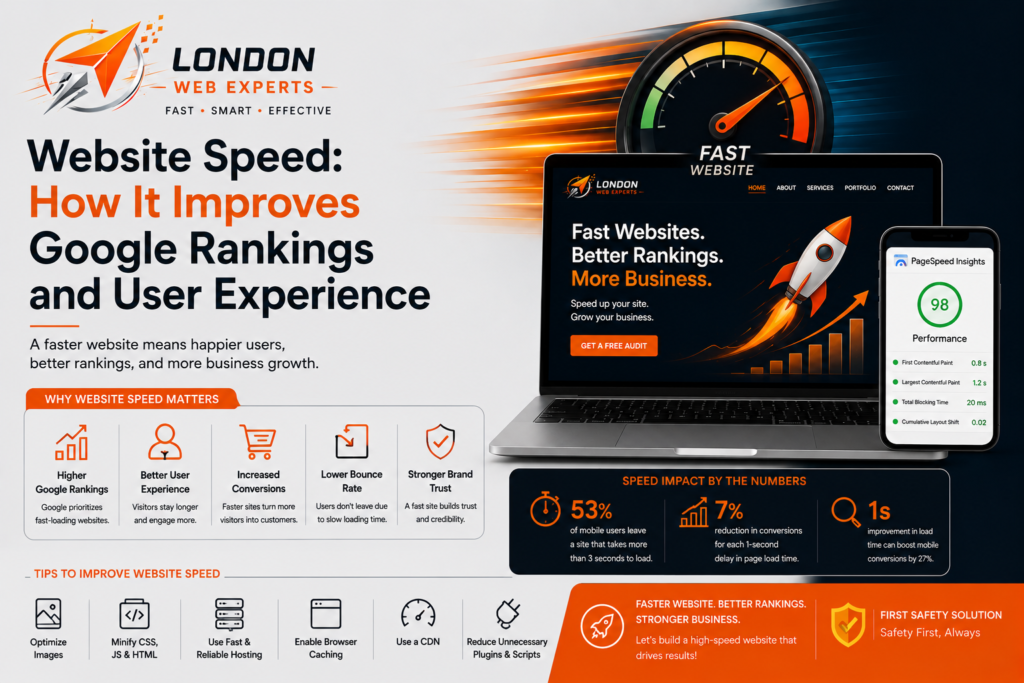
Improve Website Speed
Website performance affects both user experience and search performance. Visitors are less likely to stay on pages that take too long to load. Large images, unnecessary scripts, poor hosting, excessive plugins, and inefficient code can all contribute to slow performance. You can use Google’s PageSpeed Insights to test your website and identify performance opportunities.
External Resource:
https://pagespeed.web.dev/
Ways to improve speed include
- Compressing images
- Reducing unnecessary scripts
- Using browser caching
- Improving hosting
- Minimizing page resources
- Monitoring performance
Add Helpful External Resources
External links can provide additional context and evidence when used appropriately. A business article does not need dozens of outbound links, but linking to authoritative sources can improve usefulness and demonstrate that claims are supported by reliable information.
For SEO-related content, useful sources include Google Search Central, Google Analytics, and Google’s PageSpeed Insights.
For example:
Google Search Central:
https://developers.google.com/search
Google Analytics:
https://analytics.google.com/
External links should be relevant to the topic and genuinely useful to readers.
Good external links should
- Support important information
- Come from trustworthy sources
- Add useful context
- Be relevant to the topic
- Avoid unnecessary linking
- Help users research further
Optimize Service Pages
Service pages can be some of the most valuable pages on a business website because they target visitors who may already be interested in purchasing. Instead of creating thin pages with a few paragraphs, explain the service in enough detail to answer customer questions. For example, a website design page could explain the process, benefits, technology, target businesses, expected outcomes, FAQs, and next steps.
Strong service pages include
- Clear service description
- Customer benefits
- Relevant keywords
- Supporting information
- FAQs
- Strong calls to action
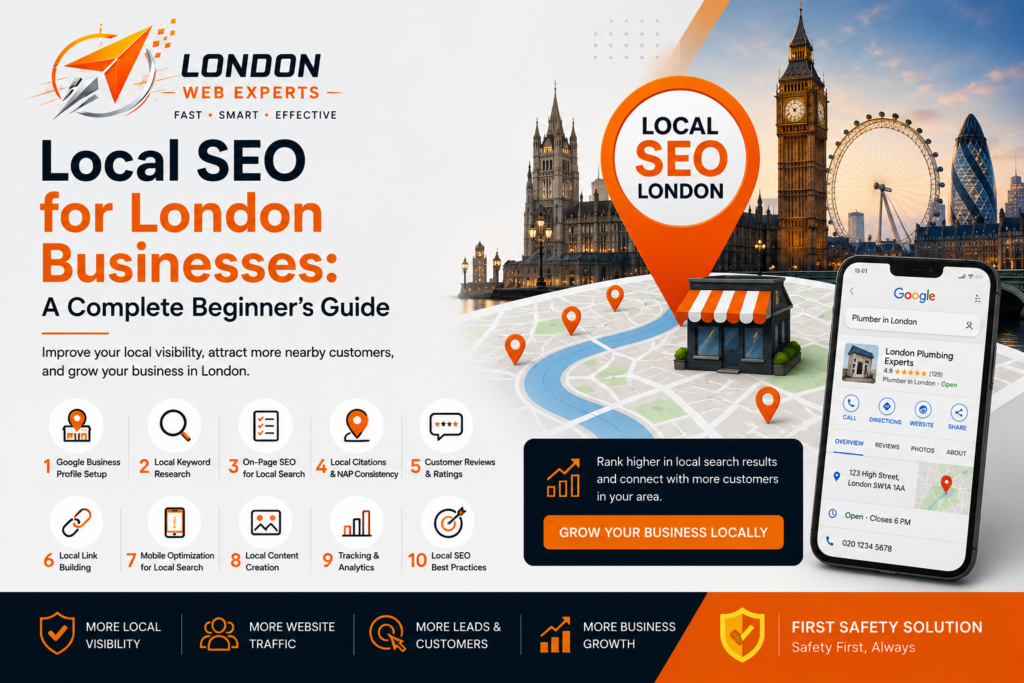
Use Local SEO Signals
For London businesses, location relevance can be particularly important. If you serve customers in London or specific London areas, your website should make this information clear where appropriate. Do not create dozens of nearly identical location pages just to target keywords. Instead, produce genuinely useful local content that helps customers understand your service area.
Local optimization can include
- London-focused service pages
- Relevant location information
- Google Business Profile
- Local customer reviews
- Local business information
- Location-specific content
Improve Existing Website Pages
SEO does not always mean publishing new articles. Existing pages can often provide significant opportunities for improvement. Review your older pages and identify content that is outdated, incomplete, poorly structured, or no longer aligned with search intent. Updating useful existing content can improve its relevance and provide a better experience for visitors.
Review older pages for
- Outdated information
- Missing sections
- Weak titles
- Poor internal linking
- Broken links
- Thin content
Common On-Page SEO Mistakes
Businesses sometimes focus so heavily on ranking factors that they forget the people who will actually read and use their websites. Overusing keywords, writing extremely short pages, creating duplicate content, or adding irrelevant links can weaken the quality of a website. The best approach is to understand what users want and then optimize the page without making it feel artificial.
Avoid these mistakes
- Keyword stuffing
- Duplicate content
- Over-optimized headings
- Long and confusing URLs
- Poor mobile design
- Ignoring search intent
Create an On-Page SEO Checklist
A checklist can make optimization easier when publishing new pages. Before launching content, review the page from both a search engine and customer perspective. Make sure the page answers the intended search query, contains useful information, has a clear structure, and gives visitors an appropriate next step.
Before publishing, check
- Is the focus keyword relevant?
- Does the title describe the page?
- Is the meta description useful?
- Is the H1 clear?
- Are headings logically organized?
- Are internal links included?
- Are images optimized?
- Is the page mobile-friendly?
- Is the content helpful?
- Is there a clear call to action?
Ready to Improve Your Business Website?
Good On-Page SEO starts with a website that has a strong structure, useful content, and a clear purpose. If your current website is difficult to navigate, outdated, slow, or not generating enough inquiries, improving individual pages can be a valuable first step. London Web Experts can help businesses improve their websites through professional web design, development, and digital solutions.
FAQ
What is On-Page SEO?
On-Page SEO is the process of optimizing individual pages on a website to improve their visibility in search engines and provide a better experience for visitors. It includes elements such as page titles, headings, content, keywords, URLs, images, internal links, and page structure. The purpose is not to repeat keywords unnecessarily but to make a page more relevant and useful for a specific search intent. For business websites, effective on-page optimization can help attract relevant visitors, explain services more clearly, and support lead generation.
Why is On-Page SEO important for business websites?
On-Page SEO is important because it helps search engines understand what individual website pages are about. When pages are clearly structured and provide useful information, they can have better opportunities to appear for relevant searches. Strong optimization can also improve the user experience by making content easier to navigate and understand. For businesses, this can mean attracting more relevant organic traffic, increasing engagement, generating enquiries, and supporting long-term online visibility.
How often should I update my website for On-Page SEO?
There is no fixed schedule for updating every website page. Businesses should review important pages whenever information changes, customer needs evolve, or search intent changes. Older content can also be reviewed to identify outdated information, missing topics, weak internal links, or technical problems. Regular content reviews help ensure that important pages remain accurate and useful. However, updates should provide genuine value rather than changing content simply to make frequent modifications.
Does On-Page SEO improve Google rankings?
Effective On-Page SEO can help search engines understand the relevance and purpose of a page, which can support search visibility. However, no optimization technique can guarantee a particular ranking position. Google considers many factors when evaluating pages, including relevance, content quality, website experience, authority, and competition. The strongest approach is to create genuinely helpful content that satisfies search intent while maintaining a technically sound and easy-to-use website.
How many times should I use my focus keyword?
There is no universal number of times a focus keyword should appear on a page. Repeating a keyword excessively can make content sound unnatural and may create a poor user experience. Instead, use the main phrase naturally where it makes sense and cover related concepts using natural language. Your title, main heading, introduction, relevant subheadings, and body content can include the topic where appropriate. The priority should always be useful, readable content rather than achieving a specific keyword count.
What is the difference between On-Page SEO and Off-Page SEO?
On-Page SEO focuses on elements you can optimize directly on your website, including content, headings, titles, URLs, images, internal links, and page structure. Off-Page SEO generally refers to activities outside your website, such as earning backlinks, brand mentions, and developing online authority. Both areas can contribute to a wider SEO strategy. Businesses should first ensure that their website provides a strong technical and content foundation before investing heavily in external promotion.
Do internal links help On-Page SEO?
Yes, internal links can help users and search engines discover related pages across a website. They can create clearer connections between content, make navigation easier, and help search engines understand website structure. For example, a blog about website SEO could link naturally to relevant website design or SEO service pages. Internal links should be useful and contextually relevant rather than added simply to increase the number of links on a page.
Is On-Page SEO important for local businesses in London?
Yes. Local businesses can use On-Page SEO to make their services and service areas clearer to search engines and customers. Relevant location information, useful service pages, local content, customer reviews, and accurate business information can all support a wider local SEO strategy. London businesses should avoid stuffing pages with location names. Instead, create useful content that genuinely helps people looking for services in the areas you serve.
Can On-Page SEO increase business leads?
On-Page SEO can contribute to lead generation by attracting more relevant visitors and helping them find the information they need. However, ranking traffic alone does not guarantee enquiries. Business pages should also have clear calls to action, useful service information, trust signals, easy contact methods, and good website usability. Combining search optimization with conversion-focused website design gives businesses a stronger opportunity to turn organic visitors into enquiries and customers.
Should I hire an SEO professional for On-Page SEO?
It depends on your website, goals, competition, and available resources. Basic improvements such as creating clear titles, improving headings, adding internal links, and updating content can be handled internally. More complex websites may benefit from professional support with technical SEO, content strategy, keyword research, structured data, performance, and conversion optimization. If SEO is an important source of business leads, professional guidance can help identify opportunities and avoid mistakes that may limit long-term search performance.
Conclusion
On-Page SEO is an important part of creating a business website that can be discovered, understood, and used effectively. From titles and headings to content, URLs, images, internal links, and mobile performance, every page element can contribute to a stronger online experience. The goal should never be to add keywords simply for the sake of SEO. Instead, businesses should focus on understanding search intent and providing genuinely useful information that answers customer questions.
For London businesses, combining strong on-page optimization with professional website design, local SEO, quality content, and a clear conversion strategy can create a much stronger digital presence. If you want your website to attract more relevant visitors and turn that traffic into business opportunities, start by reviewing your most important pages and improving them one step at a time.