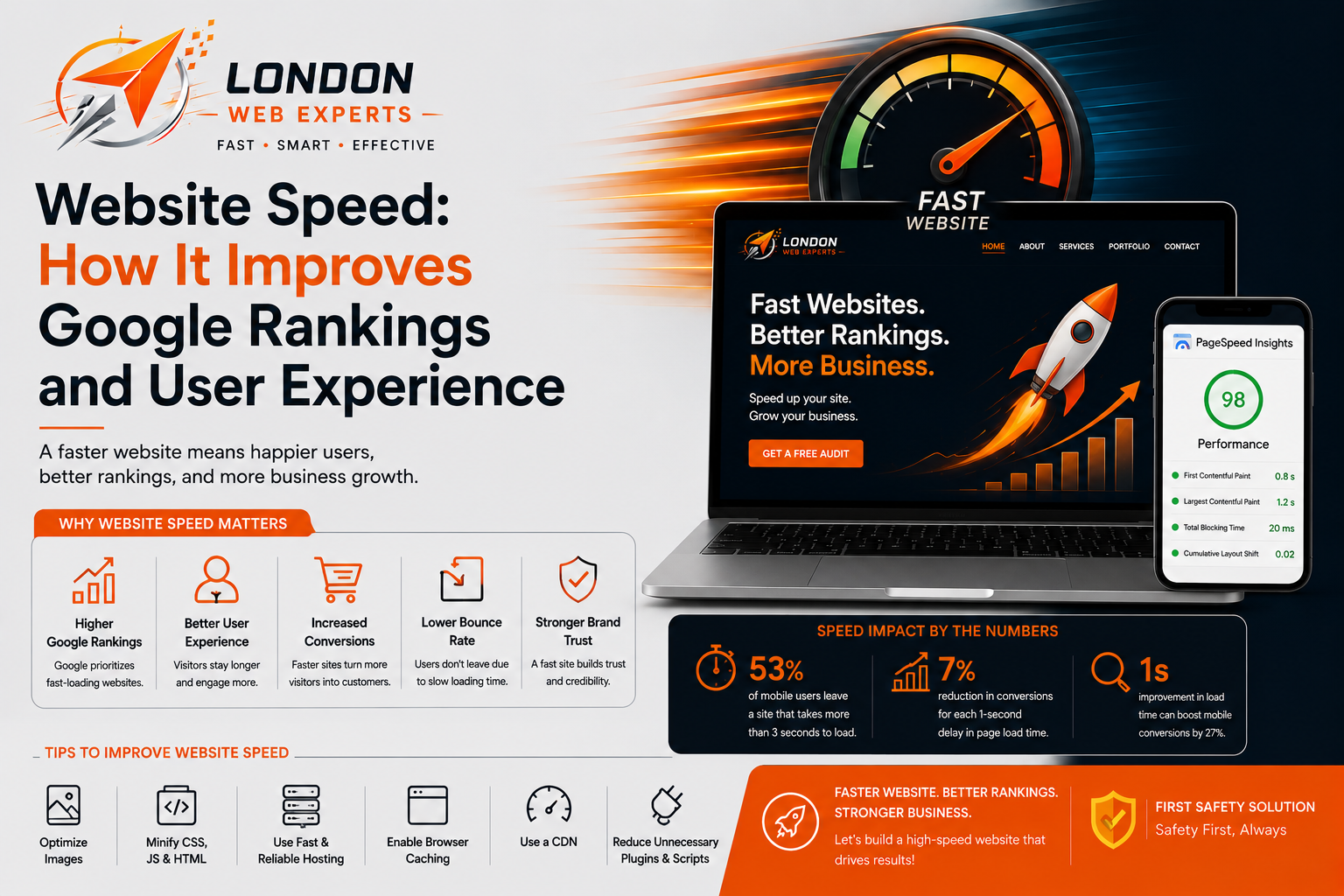
Website Speed: How It Improves Google Rankings and User Experience
In today’s digital world, people expect websites to load almost instantly. Whether someone is browsing on a desktop, tablet, or smartphone, a slow-loading website can quickly frustrate visitors and encourage them to leave. Research consistently shows that users are more likely to trust and interact with websites that respond quickly. Website Speed is no longer just a technical feature. It plays an important role in search engine optimization (SEO), user experience, lead generation, and online sales. Google wants to provide users with the best possible browsing experience, which is why fast websites often perform better in search results than slower competitors.
If your website takes several seconds to load, you may be losing visitors before they even see your products or services. Improving website speed helps businesses attract more traffic, increase customer satisfaction, and generate better long-term results.
Why Website Speed Is Important
Website speed creates the first impression visitors have of your business. Even a beautifully designed website can lose customers if pages take too long to load. Today’s users expect websites to respond almost immediately, and many will leave if they experience delays. Fast websites create smoother browsing experiences, encourage visitors to explore additional pages, and improve customer confidence. Search engines also recognize these positive user signals when determining rankings.
A business that invests in website speed is investing in better customer experiences and stronger online visibility.
Benefits of improving Website Speed
- Creates a positive first impression
- Improves customer satisfaction
- Reduces website abandonment
- Supports better SEO performance
- Increases visitor engagement
- Builds greater trust
How Google Measures Website Speed
Google evaluates Website Speed using multiple performance indicators rather than simply measuring how fast a page loads. These metrics focus on the complete user experience, including loading performance, responsiveness, and visual stability. One of Google’s most valuable free tools is Google PageSpeed Insights, which analyzes your website and provides recommendations for improving speed.
You can test your website here: https://pagespeed.web.dev/
Google also uses real user data collected through Chrome to understand how websites perform under everyday conditions.
Google evaluates factors including
- Loading speed
- Server response time
- Mobile performance
- User interaction speed
- Visual stability
- Overall page experience
Understanding Core Web Vitals
Core Web Vitals are Google’s official performance metrics that measure how users experience your website. They help determine whether pages load quickly, remain stable, and respond promptly to user interactions. Improving Core Web Vitals benefits both visitors and search engines. While they are only one part of Google’s ranking system, they play an important role in creating a positive browsing experience. According to Google Search Central, websites should aim to provide consistently good page experiences across all devices.
Learn more: https://developers.google.com/search
The three Core Web Vitals are
- Largest Contentful Paint (LCP)
- Interaction to Next Paint (INP)
- Cumulative Layout Shift (CLS)
Benefits of strong Core Web Vitals
- Better page experience
- Improved Google rankings
- Faster loading pages
- Higher visitor satisfaction
- Better engagement
- Stronger SEO performance
Website Speed and User Experience
Website Speed has a direct impact on how users interact with your website. Visitors expect pages to load quickly and respond immediately when they click buttons, browse products, or read information. A slow website often creates frustration and encourages users to leave before completing important actions. Faster websites, on the other hand, encourage visitors to stay longer, explore more pages, and interact with your business. Businesses that want to improve both performance and design can also explore our Website Design London services to create fast, user-friendly websites.
A fast, responsive website starts with professional development and performance optimization. If you’re planning a new website or upgrading an existing one, explore our Website Design Services to learn how we create SEO-friendly, high-performing websites for businesses.
Better user experience results in
- Longer session duration
- Lower bounce rates
- Higher engagement
- More page views
- Better customer satisfaction
- Improved brand reputation
Mobile Website Speed Matters
Most website traffic now comes from smartphones. Whether customers are searching for local services, reading blogs, or shopping online, they expect websites to load quickly on mobile devices. Google uses mobile-first indexing, meaning it primarily evaluates the mobile version of your website when determining rankings. Businesses with slow mobile websites may experience lower visibility in search results. Responsive design and Website Speed should always work together to provide an excellent mobile experience.
Mobile optimization improves
- Mobile search rankings
- User experience
- Local SEO
- Customer engagement
- Online enquiries
- Conversion rates
Website Speed Reduces Bounce Rate
Bounce rate measures the percentage of visitors who leave your website after viewing only one page. One of the biggest reasons for high bounce rates is slow Website Speed. When pages take too long to load, users often return to Google’s search results and visit another website instead. This means businesses lose valuable opportunities to generate enquiries and sales. Improving Website Speed encourages visitors to continue exploring your content and increases the likelihood of conversions. Businesses looking to improve technical performance can also learn more through our SEO Services London page.
Lower bounce rates help
- Improve SEO signals
- Increase visitor engagement
- Generate more enquiries
- Build customer trust
- Improve marketing results
- Increase website traffic
Faster Websites Generate More Leads
Attracting visitors is only part of the digital marketing process. Your website should also encourage users to take action by submitting inquiries, making purchases, or contacting your business. Website speed plays an important role in reducing friction during the customer journey. When pages respond instantly, visitors are more likely to complete forms, browse products, and become customers. Businesses that invest in Website Speed often experience measurable improvements in conversion rates.
Faster websites help
- Increase enquiries
- Improve conversion rates
- Encourage customer interaction
- Reduce customer frustration
- Increase online sales
- Improve business growth
Website Speed Helps Google Crawl Your Website
Google uses automated bots to crawl and index website pages. A fast website allows these bots to discover more pages efficiently, improving the chances that your latest content appears in search results. Slow websites can waste crawl budget, making it harder for Google to discover and update pages promptly. Good Website Speed supports better indexing and stronger technical SEO.
Better crawl efficiency provides
- Faster indexing
- Improved crawl budget
- Better technical SEO
- More searchable pages
- Stronger website visibility
- Better search performance
Common Causes of Slow Website Speed
Many businesses assume that slow loading times are caused only by poor web hosting. While hosting is important, several other factors can reduce Website Speed and negatively affect user experience. Identifying these issues is the first step toward improving your website’s performance. A slow website often results from a combination of technical problems rather than a single issue. Regular website audits can help identify bottlenecks before they impact your rankings and conversions. Businesses that want ongoing performance improvements can also explore our Website Maintenance Services to keep their websites optimized and secure.
Common reasons for slow Website Speed
- Large, uncompressed images
- Poor-quality web hosting
- Too many plugins or scripts
- Unoptimized CSS and JavaScript files
- No browser caching
- Excessive redirects
10 Proven Ways to Improve Website Speed
Improving Website Speed does not always require rebuilding your website. In many cases, small technical improvements can make a noticeable difference in loading times and overall performance. Combining several optimization techniques creates the best results. Regular monitoring also ensures your website continues to perform well as new content and features are added.
Improving Website Speed often requires technical expertise, from optimizing images and code to implementing caching and performance enhancements. Our experienced team provides tailored web solutions designed to maximize speed and user experience. Learn more about our full range of digital services.
Compress and optimize images
Large image files are one of the biggest causes of slow websites. Compressing images without reducing quality helps pages load much faster.
Choose reliable web hosting
A fast and reliable hosting provider improves server response times and overall website performance.
Enable browser caching
Browser caching stores website files on a visitor’s device, allowing pages to load more quickly on future visits.
Minify CSS and JavaScript
Removing unnecessary code reduces file sizes and improves loading speed.
Use a Content Delivery Network (CDN)
A CDN stores website content on multiple servers around the world, allowing visitors to access the nearest server for faster loading.
Reduce unnecessary plugins
Too many plugins can slow down your website. Remove plugins that are outdated or no longer needed.
Enable lazy loading
Lazy loading delays the loading of images and videos until they become visible on the user’s screen.
Optimize your database
Cleaning unnecessary database entries helps improve server performance and loading speed.
Reduce redirects
Too many redirects create additional requests and increase page loading time.
Monitor Website Speed regularly
Performance should be checked regularly to identify new issues before they affect users or rankings.
Benefits of these optimizations
- Faster loading pages
- Better SEO performance
- Improved user experience
- Higher conversion rates
- Lower bounce rates
- Increased customer satisfaction
Best Tools to Measure Website Speed
Website speed should be monitored continuously rather than only after problems occur. Fortunately, several free tools can help businesses analyze website performance and identify improvement opportunities. These tools provide valuable insights into loading times, Core Web Vitals, mobile performance, and technical issues.
Recommended Website Speed tools
- Google PageSpeed Insights – https://pagespeed.web.dev/
- Google Search Console – https://search.google.com/search-console
- GTmetrix – https://gtmetrix.com/
- Pingdom Website Speed Test – https://tools.pingdom.com/
- WebPageTest – https://www.webpagetest.org/
Regular testing helps ensure your website continues to meet Google’s performance expectations.
Website Speed and Local SEO
For businesses targeting local customers, Website Speed plays an important role in local search visibility. People searching for nearby services often use mobile devices and expect immediate results. A fast website improves user experience, supports mobile usability, and increases the likelihood that visitors will contact your business instead of a competitor. If your goal is to attract more local customers, you can also learn more through our Local SEO Services to strengthen your local online presence.
Website Speed supports Local SEO by
- Improving mobile performance
- Increasing local search visibility
- Reducing visitor frustration
- Supporting Google Business Profile traffic
- Encouraging more enquiries
- Building customer trust
Website Speed Is Essential for E-commerce Websites
Every second matters for online stores. Customers expect product pages, shopping carts, and checkout pages to load quickly. Even small delays can increase cart abandonment and reduce sales. Fast-loading e-commerce websites create smoother shopping experiences and encourage customers to complete purchases. Businesses operating online stores should combine Website Speed improvements with effective E-commerce Website Design to maximize conversions.
Fast e-commerce websites help
- Increase product sales
- Reduce cart abandonment
- Improve customer satisfaction
- Support product SEO
- Encourage repeat purchases
- Increase revenue
Common Website Speed Mistakes to Avoid
Many businesses unintentionally slow down their websites by making avoidable technical mistakes. Regular performance reviews help prevent these issues from affecting visitors and search rankings. Avoiding these mistakes can significantly improve both Website Speed and overall website quality.
Common mistakes include
- Uploading oversized images
- Using too many animations
- Installing unnecessary plugins
- Ignoring software updates
- Choosing poor hosting
- Not testing website performance
Benefits of Fast Website Speed
Improving Website Speed delivers benefits beyond search rankings. It creates better customer experiences, increases trust, and supports long-term business growth. Whether your goal is generating leads, selling products, or improving brand awareness, a fast website provides a competitive advantage.
Looking at real-world examples is one of the best ways to understand how performance improvements can transform a business website. Browse our portfolio to see websites we’ve designed and optimized for speed, SEO, and user experience.
Benefits of fast Website Speed
- Higher Google rankings
- Better user experience
- Increased organic traffic
- More enquiries
- Higher conversion rates
- Better return on investment
Ready to Improve Your Website Speed?
A slow website can quietly reduce your traffic, inquiries, and sales without you realizing it. Improving Website Speed is one of the most effective ways to strengthen your online presence and create a better experience for your visitors. At London Web Experts, we build fast, SEO-friendly, and mobile-responsive websites that help businesses perform better in Google Search and convert more visitors into customers. Whether you need a complete website redesign or performance optimization, our experienced team is ready to help. Contact us today to discover how improving your Website Speed can help your business achieve better rankings, increased traffic, and long-term growth.
At London Web Experts, we specialize in building fast, responsive, and SEO-friendly websites that help businesses achieve better rankings and generate more leads. Whether you need a new website, a complete redesign, or Website Speed optimization, our experienced team is here to help. Explore our homepage to learn more about our expertise, or contact us today for a free consultation and discover how a faster website can improve your online success.
FAQ Section
What is Website Speed?
Website Speed refers to how quickly a website loads and becomes fully usable for visitors. Faster websites provide better user experiences and often perform better in search results.
Does Website Speed affect Google rankings?
Yes. Google considers Website Speed as part of its page experience signals. Faster websites generally provide better user experiences, which can contribute to improved rankings.
How can I test my website speed?
You can use tools such as Google PageSpeed Insights, Google Search Console, GTmetrix, Pingdom Website Speed Test, and WebPageTest to evaluate your website’s performance.
What is a good website loading time?
Ideally, a website should load within two to three seconds. Faster loading times usually lead to better user engagement and improved conversion rates.
Does Website Speed affect mobile SEO?
Yes. Google uses mobile-first indexing, making mobile Website Speed an important factor for rankings and user experience.
Can improving Website Speed increase sales?
Absolutely. Faster websites reduce bounce rates, improve customer satisfaction, and encourage visitors to complete purchases or inquiries, leading to higher conversion rates.
Conclusion
Website speed is no longer just a technical consideration—it is a critical factor in SEO, user experience, and business success. A fast-loading website helps search engines crawl your pages more efficiently, improves Core Web Vitals, reduces bounce rates, and creates a smoother experience for visitors across all devices. By optimizing images, improving hosting, minimizing unnecessary code, and monitoring performance regularly, businesses can achieve better rankings and stronger online results. As Google’s algorithms continue to prioritize page experience and AI-driven search evolves, investing in Website Speed is one of the smartest long-term decisions any business can make. A faster website not only helps you rank higher but also builds trust, increases conversions, and supports sustainable digital growth.